The Return of Doctrinal Power in U.S. Foreign Policy
By Obaidurrahman Mirsab
The return of great power politics has revived an older and more dangerous logic in international relations: the assertion of spheres of influence. In a world where multipolarity is increasingly the norm, major powers are asserting their dominance within their respective spheres of influence. In the case of the United States, this shift is reflected in the resurgence of a centuries-old agenda: the Monroe Doctrine.
In the early hours of January 3, the United States carried out bombings on the Venezuelan capital, Caracas, culminating in the capture and removal of the sitting president, Nicolás Maduro. The bombing followed weeks of gunboat diplomacy by the Trump administration, suggesting that the Monroe Doctrine is in play two centuries later.
It was in 1823 that Washington declared the Western Hemisphere the exclusive sphere of influence of the United States under the Monroe Doctrine. Seen as a bold assertion of regional dominance, the doctrine also underscored the limitations of a young and developing republic unable to project power far beyond its regional backyard. What began as a so-called shield against European colonization transformed, over time, into a mechanism by which great powers divided the world into their own spheres of influence, exerting pressure on weaker nations according to prevailing political and economic interests. This pattern has not only shaped great power behavior earlier on, but continues to underpin Washington’s strategic thinking as reflected by its interventions in Iraq, Syria, and most recently, Iran. Washington’s intervention in Venezuela, however, placed this strategic pattern in a new light and underscored the revival of a decades-old foreign policy doctrine.
Oil, Autonomy, and the Donroe Doctrine
Washington’s decision to strike the Venezuelan capital and forcibly remove Nicolás Maduro was not driven solely by the publicly stated rationale of narcoterrorism or law enforcement. The real agenda lies deeper: in Venezuela’s vast oil reserves and in Maduro’s sustained efforts to limit the influence of American energy corporations in the country. This was evident during President Trump’s press conference following the strikes, where he openly stated that American companies would soon invest billions of dollars in Venezuela’s oil industry.
Yet this approach is not without challenges: Venezuela's energy sector remains severely underdeveloped, meaning any economic benefits from large-scale investments by the United States are less likely to materialize quickly. Some analysts have also pointed to broader geopolitical considerations, including access to Venezuela's critical minerals and the desire to increase pressure on left-leaning governments in the region. This broader pattern of U.S. interventions in Latin America has historical precedent. Moreover, the manner in which President Trump announced that Washington would effectively “run” Venezuela for the time being—until what he described as a “safe transition of power”—signals a clear desire to subjugate weaker nations in pursuit of political and economic interests. It reflects blatant regime-change ambition, cloaked in the language of stability and transition.
Trump did not describe the operation as an extension of the Monroe Doctrine. Instead, he referred to his strategy as the “Donroe Doctrine,” claiming that the United States had superseded the two-century-old framework. That assertion was not merely rhetorical. In November 2025, the Trump administration released a renewed National Security Strategy explicitly modeling its approach toward the Western Hemisphere on the Monroe Doctrine, pledging to “reassert and reinforce” it in order to “restore American preeminence.”
A Historical Record
This pattern of U.S. interventions in Latin America has historical precedent. In 1904, the doctrine took a decidedly interventionist turn when President Theodore Roosevelt introduced the Roosevelt Corollary, asserting Washington’s right to intervene in Latin America under certain circumstances. What followed was a wave of U.S. interventions in the Dominican Republic (1904), Nicaragua (1911), and Haiti (1915) justified, as the National Archives notes, as efforts to “keep the Europeans out.”
Although under Franklin D. Roosevelt’s administration the United States formally retreated from overt interventionism—most notably under Good Neighbor Policy—the ideological foundation had already been laid. Even when the Obama administration’s Secretary of State, John Kerry, declared that the “era of the Monroe Doctrine is over,” the notion never fully disappeared from American strategic thinking. This is reflected in the persistence of U.S. sanctions on Cuba, despite periods of diplomatic thaw, indicating enduring strategic sensitivities in the region.
The second Trump administration’s strategy signals the full-throated return of this line of thinking, albeit in a rebranded form. Under the “Donroe Doctrine,” the emphasis is no longer strictly geographical. While the original geographical delimitation was closely tied to gains for Washington vis-à-vis Europe in Latin America, its contemporary form prioritizes market control, sanctions, coercive economic policies, and military intervention where Washington sees fit. The difference, therefore, lies in the explicit articulation of coercive interests tied to a scope beyond the Western Hemisphere, as reflected in the U.S.’ current entanglement in Iran, where it is targeting strategic energy corridors such as the Strait of Hormuz and Kharg Island.
This global application of the doctrine does not replace Washington’s longstanding hemispheric focus on its Latin American neighbors. Indeed, the United States treats it as a hostile act when countries of the region strike deals with rival powers, as reflected by punitive economic actions on countries such as Nicaragua following its closer alignment with Russia and China.
Much of this posturing stands in contrast to Trump’s political messaging. The foundation of his second term rested on an “America First” agenda, which promised to avoid unnecessary wars and focus on domestic matters. Yet in 2025 alone, the United States bombed Syria, Nigeria, Iran, Yemen, and Somalia. Now, in 2026, Venezuela has been added to that list. In this sense, Venezuela represents not an exception but the latest manifestation of broader interventionist traditions.
The United States’ history with interventionism offers little reassurance. In many cases where the United States pursued regime change—Iraq, Libya, and Syria, to name a few—the result was years of war and destruction. The new episode in Venezuela, albeit under a very different context, risks repeating similar patterns for the region.
The Trump administration’s disregard for international law sets a precedent whereby strong states act as they wish with impunity. Rather than weakening opposition, the current strategy strengthens what some analysts call an “axis of upheaval”—an emerging alignment between Russia, China, Iran, and North Korea, which in turn provides fresh avenues to undermine U.S. credibility. Paradoxically, while the doctrine aims to assert Washington’s dominance and contain multipolar resistance, it may in fact be accelerating it.
Selective Spheres of Influence
The logic of spheres of influence is applied selectively. Although Washington rejects Russia’s claims over Ukraine in Eastern Europe, by Donroe Doctrine logic, Russia might assert sovereignty over Ukraine and expect the United States to refrain from intervention.
When it comes to to its own interventions, however, Washington does not apply the same sphere-of-influence logic. On February 28, the Trump administration launched Operation Epic Fury jointly with Israel, moving beyond gunboat diplomacy with direct airstrikes on Iran. The conflict has already escalated into a broader regional crisis, with multiple Gulf nations coming under Iranian retaliatory fire. With tensions rising in the Strait of Hormuz, the global economy is witnessing an energy crisis of historic proportions.
Although this time, the crisis has wider repercussions than the Venezuela intervention, both incidents reflect a unilateral logic in which states face significant diplomatic and economic coercion precisely because they fall within Washington’s strategic orbit. This suggests that the Donroe Doctrine functions less as a formal policy and more as a flexible strategic framework—one that enables Washington to pursue its strategic goals where it sees fit, challenging sovereignty and international norms.
Rethinking Intervention in a Multipolar Order
For Washington, the lessons are clear: military interventionism cannot and should not be the driving force of U.S. foreign policy. It should be evident by now that rigid doctrinal policies cannot be effectively applied to a multipolar reality. The Donroe Doctrine has functioned as a destabilizing instrument in Latin America and beyond; expansionist military behavior ultimately causes more damage than it delivers in strategic gains. This damage is not merely strategic but deeply human, as such interventions have repeatedly resulted in large-scale civilian casualties, displacement, and the destruction of critical infrastructure. In contexts such as Syria, Venezuela, and now Iran—all of which became sites of U.S. military action under President Trump—these interventions have pushed countries into prolonged humanitarian crises, weakening state institutions, entrenching instability, and setting the conditions for the emergence of non-state actors. While such actions may yield short-term tactical advantages for Washington, they often come at the expense of long-term regional stability and human security, raising important questions about who bears the cost of such policies.
Diplomatic engagement and bilateral agreements grounded in mutual respect must replace economic coercion and regime engineering as the preferred tools of statecraft. Congressional oversight over military actions abroad should be strengthened to ensure that military superiority is not exploited under the façade of global policing or unilateral doctrines designed for individual enrichment. Preventing spheres of influence from hardening into permanent hierarchies is imperative, because in an increasingly multipolar world, the absence of coordination—amid fragmented global governance and intensifying great power rivalry—increases the risk of miscalculation and misunderstanding during conflict.
Punished for Autonomy
In the end, Caracas was not bombed because it posed a threat to the United States of America. It appears to have been bombed because it challenged the emerging worldview of the Trump administration. It is increasingly evident that the Donroe Doctrine broadly threatens to undermine sovereignty and destabilize the existing world order.
The question is no longer whether the Donroe Doctrine has returned to American foreign policy. The more pressing matter is whether a doctrine built on coercion, regime change, and unilateral intervention can be sustained in an increasingly multipolar world. The recent intervention in Iran—much like those of the past—has demonstrated the limits of military power and the growing costs of enforcing spheres of influence. If these episodes are any indication, the Donroe Doctrine may ultimately prove to be the catalyst for the decline of American hegemony rather than a blueprint for its renewal.

Obaidurrahman Mirsab is a Delhi-based freelance geopolitical writer pursuing an undergraduate degree in Multidisciplinary Studies at Jamia Millia Islamia, New Delhi. His work focuses on international relations, geopolitics and global political economy, and his articles have been published by Fair Observer, International Policy Digest, International Affairs Forum at the Center for International Relations, Washington, D.C., Global South Forum, Madras Courier, The Eastern Herald, and The Jamia Review.
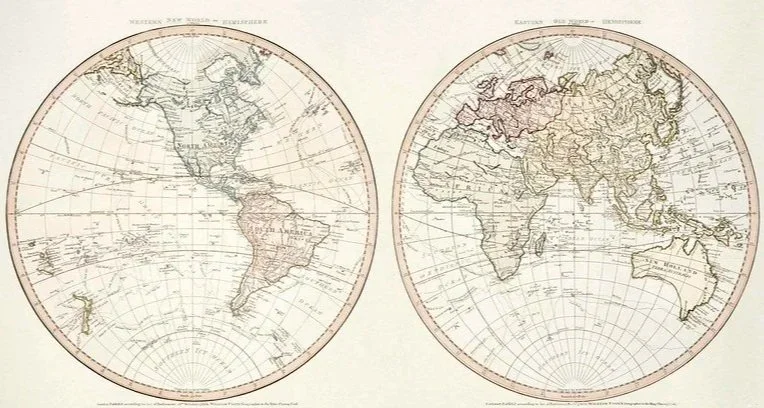
"New world or western hemisphere" by rawpixel is licensed under CC BY 2.0.